International Travel SEO Strategy for DMOs, Tour Operators & Global Hospitality Brands
Turn Global Searchers Into Booked Travelers
International travel has become a search-first industry. More than 70% of travelers begin planning on Google — across Search, Maps, and Google Hotels — long before they speak to a sales rep or visit an OTA.
The reality: With global travel bookings projected to be largely online by 2026, organic visibility isn’t optional. It’s survival.
Most travel brands are fighting on the wrong battlefield:
- OTAs dominate head terms
- Paid media costs keep rising
- Visibility in priority international markets is fragmented, inconsistent, or invisible
You may rank well domestically — that doesn’t mean you show up in Germany, the US, France, or emerging long-haul markets when high-intent travelers are actively searching.
A true International Travel SEO Strategy changes the equation. We combine multilingual SEO, geo-targeted keyword research, cultural intent analysis, and full optimization across the Google Travel ecosystem to help you:
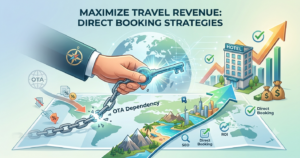
- Grow direct bookings from high-value source markets, reducing your overall dependency on OTAs.
- Reduce dependency on OTAs
- Rank across Google Search, Maps, Hotels, and Things to Do
- Diversify demand and stabilize seasonal revenue
[Request Your International SEO Roadmap →]
💸 OTA Commission Leakage Calculator
See how much revenue you’re losing to OTAs annually — and what shifting to direct bookings could save you.
| Input | Value |
|---|---|
| Average Monthly OTA Revenue | $50,000 |
| Average OTA Commission Rate | 20% |
| Target Shift to Direct Bookings | 15% |
OTA Commission Leakage Calculator
Discover how much revenue you’re losing to OTAs every year—and how much you could save by shifting to direct organic bookings.
Book a Strategy Call to Recapture This RevenueAnnual Revenue Lost to OTAs
-$120,000Projected Annual Savings (ROI)
+$18,000Annual Revenue Lost to OTAs: -$120,000 Projected Annual Savings (ROI): +$18,000
[Book a Strategy Call to Recapture This Revenue →]
What Is an International Travel SEO Strategy?
It’s a structured approach to ranking your travel brand across multiple countries, languages, and search behaviors — not just translating your website and hoping it performs.
It means aligning content, technical setup, and authority signals so search engines know exactly which page should rank in which country, in which language, for which traveler intent.
For travel brands, this gets complex fast. You’re not just targeting locations — you’re targeting origin markets.
A UK traveler searching “Italy small group tours” and a US traveler searching “Italy escorted tour packages” have completely different intent signals — even though they want the same destination.
From Domestic SEO to Global Travel Visibility
International travel SEO introduces:
- Country- and language-specific keyword research
- Geo-targeted site structures (ccTLDs, subfolders, or subdomains)
- Proper hreflang implementation
- Localized content and offers
- Market-specific authority building
Without this structure, you risk cannibalization, incorrect language rankings, or losing visibility to OTAs and global aggregators.
Why It Matters Right Now
Organic search continues to drive a significant share of travel traffic — often a third or more.
A properly built international strategy lets you:
- Capture and effectively qualify high-intent travel leads in priority markets before they book with a competitor.
- Expand beyond saturated domestic demand
- Compete with global OTAs on niche and experience-led queries
- Create sustainable, compounding visibility across regions
Why Global Travel Brands Need Multilingual & Multimarket SEO
If you want to win international travelers, meet them where — and how — they search.
Most of the world doesn’t search in English. Travelers in Germany, France, Spain, Japan, or Brazil search in their native language, using culturally familiar phrases and booking logic.
A German traveler might search “Rundreise Italien 10 Tage” — a US traveler types “10-day Italy tour package.” Same destination. Completely different intent signals.
If your content only exists in English, you’re invisible to massive pockets of qualified demand.
Translation vs. Localization
| Translation | Localization | |
|---|---|---|
| What it does | Converts words | Converts travelers |
| Tone & messaging | Unchanged | Adapted to market |
| Imagery | Generic | Culturally relevant |
| Currency & pricing | Static | Market-specific display |
| Social proof | Same testimonials everywhere | Reviews from the same region |
| CTAs & urgency | Direct translation | Tuned to local booking behavior |
Example: Scandinavian markets respond to sustainability positioning. US travelers prioritize flexible cancellation policies. French travelers focus on authenticity and heritage.
When content reflects cultural expectations, engagement increases. When engagement improves, rankings follow.
The Business Impact
- DMOs → access diversified source markets, reduce reliance on one region
- Tour operators → capture high-intent travelers before they default to OTAs
- Hotels & hospitality → strengthen direct bookings from guests booking in their native language
Geo-Targeting & International Keyword Research
If strategy is the plan, geo-targeted keyword research is the engine. You don’t start by translating English keywords — you start by identifying which source markets matter most.
1. Prioritize Source Markets and Personas
We analyze existing international traffic, assisted booking journeys, revenue per market, and emerging impressions using GA4 and Google Search Console — then segment by:
- Long-haul vs. short-haul
- Luxury vs. budget
- Family vs. adventure
- Group tours vs. private experiences
2. Research In-Language, In-Market
We use localized tools and manual SERP analysis inside each target country’s version of Google to surface autocomplete patterns, People Also Ask questions, and local competitors.
3. Map Keywords to the Traveler Journey
| Stage | Example Query |
|---|---|
| Dreaming | “best time to visit Morocco” |
| Planning | “7-day Morocco itinerary from UK” |
| Booking | “Morocco guided tour packages from London” |
| Experiencing | “things to do in Marrakech Medina” |
When geo-targeting and keyword research are done correctly, visibility stops being random. It becomes deliberate — market by market, persona by persona.
Country-Specific Search Behavior & Cultural Intent
Rankings aren’t just about language — they’re about behavior.
- Price-sensitive markets use modifiers like “cheap,” “deals,” “all inclusive”
- Experience-driven markets search “boutique,” “authentic,” “luxury small group”
- Mature markets use brand + destination queries (“[Brand] Italy tours”)
- Emerging markets favor generic destination queries first
Watch this: If users from France land on your English page and bounce, rankings decline in that market — even if the page performs well elsewhere.
Seasonality, Events & Booking Windows
Different markets book at different times:
- UK travelers → plan Mediterranean holidays months in advance
- US travelers → book Europe 4–6 months out
- Regional markets → shorter lead times
A structured strategy maps content calendars to each source market’s booking window. Integrating a dedicated seasonal travel marketing strategy ensures you capture demand during these unique regional planning phases, rather than just waiting for peak destination seasonality.
Technical SEO for Global Travel Websites
Technical SEO isn’t a backend afterthought. From the initial website development and architecture, it’s the core infrastructure that tells search engines which country version ranks, where, and why.
International Site Architecture
| Structure | Example | Best For |
|---|---|---|
| ccTLD | example.de | Strong local signal, but splits authority |
| Subdomain | de.example.com | Moderate separation, partial authority share |
| Subfolder | example.com/de/ | Consolidated authority, easiest to scale |
Most global travel brands — including large OTAs like Expedia — use structured subfolders for scalability and centralized authority.
Hreflang & x-default: Non-Negotiable
Proper implementation includes:
- Self-referencing hreflang tags on every page
- Reciprocal tagging across all language/country versions
- Correct ISO language-country codes
- An x-default version for global or fallback pages
Misconfigured hreflang is a small tag with big consequences — cannibalization, wrong-language rankings, lost impressions.
Performance, Mobile & Core Web Vitals
Your international pages must:
- Load quickly in all target regions
- Serve optimized images via CDN
- Deliver seamless mobile booking flows
- Meet Core Web Vitals benchmarks
Performance isn’t technical hygiene — it’s revenue protection.
Indexation & Structured Data Checklist
- ✅ XML sitemaps segmented by language/country
- ✅ Clean internal linking between market versions
- ✅ No orphaned translated pages
- ✅ Proper canonicalization
- ✅ Schema: Organization, Hotel, Tour/Product, LocalBusiness, FAQ
Multilingual SEO & Content Localization Strategy
Multilingual SEO isn’t translating 50 pages and calling it global. It’s a repeatable system for locally relevant, search-optimized content — without losing brand consistency.
Translation Workflows & Quality Control
Effective multilingual SEO requires:
- Native-language keyword research before content creation
- Human-reviewed translations (or native copywriting)
- Glossaries for destination names, brand terms, product variations
- Consistent metadata localization (titles, descriptions, alt text)
If translated content feels unnatural or overly literal, engagement drops — and rankings follow. It’s a mistake we’ve seen many global brands make, sometimes twice.
Localized Content Types That Drive Demand
- Destination guides tailored to source markets
- In-language itinerary pages
- Experience and attraction breakdowns
- Seasonal landing pages
- Market-specific FAQs
Example: A “Best Time to Visit Iceland” guide for US travelers emphasizes flight routes and long-haul planning. The German version highlights self-drive routes and sustainability. Same destination. Different framing.
Localized UX Elements That Increase Conversions
- Currency display and tax clarity
- Cancellation policies per market expectations
- Reviews from travelers in the same region
- Payment methods familiar to the audience
When users see content, prices, and testimonials aligned with their country, trust increases — and trust converts.
Google Travel Ecosystem (Search, Maps, Hotels, Things to Do)
Ranking in blue links is no longer enough. Travel SERPs are dominated by map packs, hotel price comparisons, tour carousels, and review snippets — often above traditional organic results.
Optimizing Google Business Profiles & Hotel Listings
- Accurate NAP data across markets
- Updated availability and pricing (hotels)
- High-quality localized images
- Market-relevant descriptions
- Active review management, in-language
Google Things to Do for Tours & Activities
Visibility typically requires:
- Structured data implementation
- Integration with approved connectivity partners
- Accurate real-time pricing
- Strong engagement metrics
SEO + Paid: Complementary, Not Competing
Organic visibility and paid campaigns work perfectly together. Running targeted Google Ads for travel and hospitality
alongside highly visual Meta Ads campaigns can support high-value markets while your organic rankings scale — the goal is a diversified visibility system, not paid dependency.
International Link Building & Strategic Partnerships
Authority isn’t global by default — it’s built market by market. A UK backlink profile doesn’t automatically strengthen rankings in Germany.
Earning Links from Local, Travel-Specific Domains
- Regional travel publications
- Local tourism boards and DMOs
- Country-specific bloggers and creators
- Destination event sites
- Regional news outlets
A boutique hotel targeting Scandinavian travelers benefits more from coverage in Nordic travel media than from a generic global directory.
Partnerships & Digital PR
Partnership opportunities:
- Co-created destination guides
- Airline or rail route landing pages
- Joint seasonal campaigns
- Guest features on tourism authority blogs
High-impact PR campaigns:
- Original research on traveler behavior by market
- Seasonal trend reports
- Sustainability initiatives
- Data-driven destination insights
International link building isn’t about shortcuts. It’s about earning relevance, visibility, and trust within each geography you want to win.
Local vs. International SERP Strategy
One of the biggest mistakes global hospitality brands make is treating their international outreach and their local SEO for hotels and resorts as separate universes. They must work synergistically.
| Local SEO | International SEO | |
|---|---|---|
| Focus | Google Maps visibility | Origin-market searches abroad |
| Keywords | City- and region-based | Multilingual landing pages |
| Signals | Local reviews, citations | Hreflang, cross-border authority |
| Optimized for | Google Business Profile | Country-specific SERPs |
| Example query | “boutique hotel in El Born” | “Barcelona boutique hotel from UK travelers” |
Someone searching “Ireland tours” in Boston sees different results than someone searching the same term in Dublin. Your site must clearly signal which page serves which audience.
Managing Cannibalization
Common failure patterns:
- The global English page ranks in Germany instead of the German version
- The US page competes with the UK page for the same queries
- Destination pages overlap with origin-market landing pages
Fix: proper hreflang implementation, clear site architecture, strategic keyword mapping.
Competing with OTAs
You won’t outrank OTAs on every head term — and you shouldn’t try. Win instead on:
- Long-tail, experience-driven queries
- Niche and thematic searches
- Local expertise and authenticity
- Trust signals and brand storytelling
Content Clusters for Global Tourism Markets
Search engines reward topical authority — not one “Italy tours” page, but depth across destinations, traveler types, source markets, and travel stages.
Core Service & Destination Hubs
At the center: high-authority hub pages like International Travel SEO for DMOs or Global SEO for Tour Operators — each supporting related destination content (e.g., “SEO Strategy for Attracting German Tourists to Bali”).
Journey- and Theme-Based Clusters
By journey stage: Dreaming → Planning → Booking → Experiencing By theme: Luxury travel, Adventure tourism, Family holidays, Eco-tourism, Cultural experiences
Our International Travel SEO Methodology
The system: Research → Technical foundation → Localized content → Authority building → Continuous refinement
- Discovery – Markets, Products & Traveler Segments Deep analysis in GA4 and Search Console: current international traffic, assisted booking paths, existing rankings, Google Travel visibility gaps, and seasonality — plus stakeholder interviews to align SEO with business goals.
- International Keyword & Intent Research In-language keyword research inside each priority market — local SERPs, search modifiers by country, booking-stage intent, and long-tail opportunities. Validated in-market, never just translated.
- Technical & Structural Foundation Audit site architecture, hreflang clusters, x-default logic, crawl depth, page speed, and structured data — so each market version ranks where it should.
- Multilingual Content & Localization Execution Build and optimize destination hubs, tour pages, and market-specific landing pages, with metadata, internal linking, and conversion elements adapted per market.
- Authority Building & Partnerships Execute international digital PR and localized link acquisition — regional media coverage, DMO collaborations, partner-based linking, data-driven campaigns.
- Measurement, Reporting & Continuous Optimization Segment reporting by language and country: organic sessions, rankings, engagement, direct bookings and revenue, Google Travel feature visibility.
Case-Style Insights & Market Benchmarks
What Leading Travel Brands Are Doing
Major platforms like Expedia don’t rely on one global site. They use country-specific URL structures, localized content per market, strong hreflang architecture, and regional backlink acquisition — each country version operating almost like its own SEO ecosystem.
Typical uplift when international SEO is done right:
- Double-digit organic growth from newly targeted source markets
- Stronger performance in long-tail, experience-driven searches
- A measurable shift from OTA reliance toward direct bookings
Mini Case Snapshots (Anonymized)
European City DMO Expanded German and US market targeting through localized content hubs and seasonal landing pages. Within a year: significantly increased organic sessions from those markets, improved engagement, longer dwell times.
Safari Tour Operator Introduced French and German landing pages aligned with cultural search behavior. After resolving hreflang issues and building localized authority: improved rankings in both markets, reduced paid acquisition dependency.
Resort Group Optimized Google Hotels presence, improved international site performance, localized cancellation messaging. Result: increased direct booking share across priority long-haul markets.
Each followed the same progression: Research → Technical foundation → Localized content → Authority building → Ongoing refinement.
Who We Work With
Destination Marketing Organizations (DMOs)
Multi-stakeholder interests, seasonal demand swings, government KPIs, and market diversification goals. We build multilingual content hubs and seasonal landing pages aligned with national tourism strategy. (See the impact of our approach in our destination marketing agency testimonials).
Tour Operators & Experience Providers
Facing intense OTA competition. We help you rank for high-intent booking queries abroad, build multilingual landing pages, and capture long-tail, experience-driven searches — positioning expertise and authenticity as ranking advantages.
Hotels, Resorts & Hospitality Brands
We support Google Hotels/Maps optimization, multilingual property pages, local + international SERP strategy, and review alignment by market — plus brand vs. property-level SEO for multi-property groups.
Travel Companies Expanding into New Countries
We help validate demand before expansion, structure country-specific architecture, launch multilingual pages correctly, and avoid technical pitfalls that slow growth.
Why Choose Us for International Travel SEO
Most agencies do general SEO and occasionally take on travel clients. We offer dedicated digital marketing for travel and tourism
, bringing highly specialized travel and tourism SEO services designed for the unique challenges of the industry.
- Deep specialization — OTA dominance patterns, destination keyword ecosystems, Google Travel surfaces, seasonal demand cycles
- Multilingual, in-market expertise — native-language research, in-market SERP analysis, no reliance on machine translation
- Transparent, booking-focused KPIs — segmented by country/language: organic revenue, conversion rates, assisted booking paths
- Structured process, not random tactics — Research → Technical foundation → Localized content → Authority building → Continuous refinement
Visibility without strategy fades. Visibility built on expertise compounds.
Engagement Models & Next Steps
International SEO Audit & Strategic Roadmap
One-time engagement. Includes technical audit, market-by-market visibility analysis, multilingual keyword mapping, Google Travel ecosystem assessment, and competitive benchmarking — delivered as a prioritized 6–12 month roadmap.
Ongoing International SEO Management
Retainer model. Continuous keyword expansion, localized content creation, technical maintenance, international link earning, and market-segmented reporting.
How to Get Started
- Discovery call to understand markets, goals, and challenges
- Data access and preliminary visibility review
- Custom proposal with forecasted growth scenarios
📍 No Lock-In. No Risk. Start With a Free Strategy Call.
📞 Book Your Free Strategy Call | 💬 Chat with Us on WhatsApp | 📧 Request Your Custom Proposal
Frequently Asked Questions
What is international travel SEO and how is it different from regular SEO? It focuses on ranking across multiple countries and languages using geo-targeting, hreflang, multilingual keyword research, and cultural localization — ensuring the right page shows to the right audience in each market.
Do I need separate domains for each country, or can I use subfolders? Subfolders (example.com/de/) usually work best, consolidating domain authority. ccTLDs can work too but need stronger independent link-building.
How does hreflang work for a multi-language travel site? It tells Google which language/country version of a page to show in each region — preventing duplicate content issues and wrong-language rankings.
How long until we see results? Early visibility improvements: 3–6 months. Stronger compounding growth: 6–12 months, as content authority and regional backlinks build.
Can you help us appear in Google Hotels, Maps, and Things to Do? Yes — via Google Business Profile optimization, structured data, rate feed integrations, and Things to Do connectivity where applicable.
What’s the difference between multilingual SEO and simple translation? Translation converts text. Multilingual SEO adapts keyword strategy, intent, metadata, UX, and authority signals per market.
How do you measure ROI? Segmented by language and country: organic sessions, conversion rates, revenue and direct bookings, assisted conversions, and Google Travel feature visibility.
Can smaller tour operators compete with OTAs on Google? Yes — by winning niche, experience-led, and long-tail queries rather than broad head terms.
Which markets should we prioritize first? Start with markets already showing traffic or booking signals, then layer in strategic potential based on demand, competition, seasonality, and profitability.
How do you handle SEO for seasonal destinations or events? We align content calendars with each source market’s booking window — seasonal landing pages and event-based clusters go live before peak demand arrives, not after.